
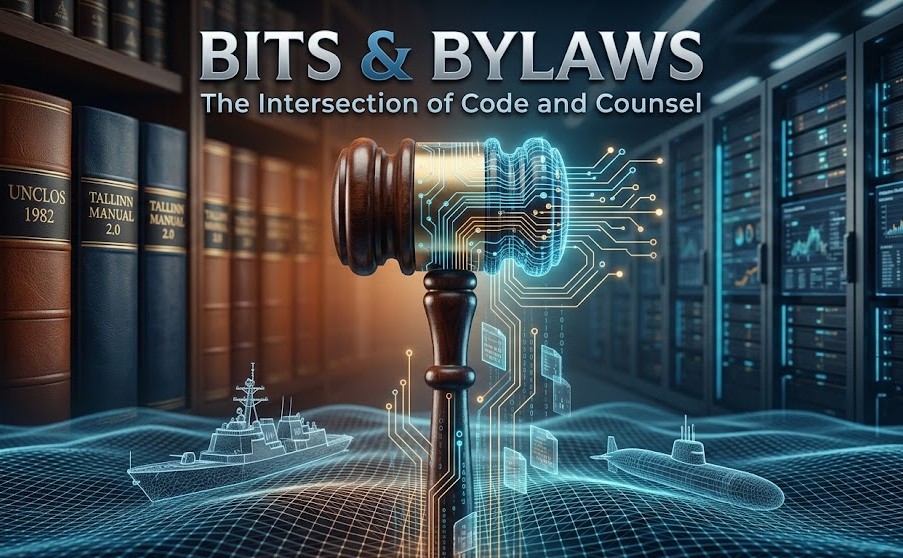
As a 45-year-old law student who spent 17 years in the “Silicon Valley” of systems engineering before shifting to the “Shastri Bhawan” of legal codes, I’ve learned that the most dangerous bugs aren’t always in the software; sometimes, they are in the International Order.
On March 4, 2026, a “system crash” occurred in the Indian Ocean that every aspiring lawyer and IT professional needs to analyse. The sinking of the Iranian frigate IRIS Dena by a US Navy torpedo isn’t just a headline; it’s a masterclass in the breakdown of Maritime Law and the emergence of Cyber-Physical Warfare.
The “Innocent Passage” Bug
Under UNCLOS (Articles 17-19), every ship has a right to “Innocent Passage.” The Dena was transiting international waters, returning from the MILAN-2026 exercise—a mission of “Camaraderie and Cooperation.”
The Legal Glitch: US Defence Secretary Pete Hegseth’s boast of “no stupid rules of engagement” is, in the eyes of a lawyer, a confession of Manifest Arbitrariness. If we allow a ship returning from a diplomatic mission to be targeted without active hostility, we aren’t just sinking a hull; we are deleting the Rule of Law.
The “Electronic Prelude”: A Tallinn Manual Case Study
Here is where my IT background kicks in. Reports suggest Dena’s electronic warfare suites were disabled by electromagnetic means before the strike.
In system-level terms, this is a Privilege Escalation followed by a Delete Command. Under Rule 92 of the Tallinn Manual 2.0, a cyber-operation causing physical destruction is an “Armed Attack.” The “Electronic Silence” that preceded the hit is the digital forensic evidence that shifts this from a standard naval engagement to a state-sponsored cyber-physical crime.
Sovereignty
This incident occurred within Sri Lanka’s search-and-rescue zone and near India’s sphere of influence. As a “Net Security Provider,” India cannot ignore this. If the Indian Ocean becomes a “No-Man’s-Land” where global powers settle scores without protocols, our maritime sovereignty is effectively compromised.
Final Thoughts
As I finish my 6th semester, this case reminds me that the law must evolve as fast as a Mark 48 torpedo. We cannot judge a 2026 conflict with 1945 mindsets.
Whether it’s a “Logic Bomb” or a physical one, the result is the same: 87 sailors lost and a hole in the global legal fabric. I believe that Justice today requires both a Judge’s Gavel and a Digital Forensic Audit.
What’s your take? Is “Absolute Immunity” in warfare a relic of the past, or are we entering an era where “might is right” again? Let’s debate in the comments.
The analysis provided on QickStep: Bits & Bylaws is for informational and educational purposes only. While this content integrates 17+ years of System-Level IT expertise with ongoing LLB (Semester 6) academic insights, it does not constitute legal advice or a lawyer-client relationship. Guideline Compliance: This analysis is drafted with reference to the Bharatiya Sakshya Adhiniyam (BSA) and BNSS frameworks. Jurisdiction: All content is subject to the jurisdiction of the courts in Lucknow, UP, India. Verification: Readers are advised to verify digital forensic standards and specific case precedents before placing reliance for judicial proceedings.